
How to Succeed at Careers That Don’t Exist Yet
By Jeff Altman, The Big Game Hunter
Chris Bishop started professional life as a touring rock and roll bass player with a band that was the underbill the Eagles, Fleetwood Mac, ZZ Top, Linda Ronstadt, Uriah Heap, Billy Preston, Weather Report, Return to Forever, Blue Oyster Cult, and Frank Zappa. After the band broke up, he was a freelance bass player for many other famous acts before beginning a journey through 7 more careers.
In this interview, we speak about succeeding at careers that don’t exist yet.
So my guest today is Christopher Bishop, but you can call him Chris, who’s a workplace futurist who’s had eight careers so far, including touring rock musician, jingle producer, website project manager, among others. He spent 15 years incorporated IBM in a variety of roles, including business strategy consultant, communications executive, and driving social media adoption much better, and the use of virtual worlds for training events. He’s also got a program that we’ll talk about later on that will help you experience, shall we say, succeed in jobs that don’t exist yet.
Christopher or Chris, welcome. Appreciate you having you on today.
Chris Bishop
Christopher Bishop Well, thank you, Jeff. I’m delighted to be here, man. Looking forward to our conversation.
Thanks for inviting me.
Jeff Altman It is my pleasure. And with that, let me just start by saying, eight careers, eight, eight careers. Is there a common theme that runs through some of these careers or through all of them?
Chris Bishop
Christopher Bishop Well, I’d say, I mean, at a meta level, probably curiosity, right? So I’m a curious guy. I’m always interested in kind of new stuff, certainly new tech, but looking to do things that, you know, I get bored easily.
Maybe I’m looking to do things that are interesting to keep me sort of engaged. The other thing I would say is themes that have run through these eight careers are, could be summarized sort of in three data points or four, if you will. Chase the maelstrom, find the chaos, go for the mayhem.
Jeff Altman: So I’m seeing a theme there.
Christopher Bishop Yeah, there’s like a theme, right? So it’s like, my advice is, you know, go where they don’t know what it is yet.
And the Royal they being existing business models or organizations, right? And that approach has served me well in the 45 years since I graduated from college with a degree in German lit of all things.
I look for- Chase the maelstrom Ignore the German lit majors.
Chris Bishop
Christopher Bishop Oh yeah, I used to translate the menus for the band when we were on the road in Germany, right? That’s kind of the real world application for that skill. But it’s like, find where they don’t know what it is, and then you can contribute.
You can help create whatever the new thing is. And with any luck, be remunerated, right? Make a living.
I mean, get paid to do it.
So- Jeff Altman So in navigating from being a touring rock musician, by the way, there’s no such thing as rock and roll anymore. So working at IBM, how the heck should manage this?
Chris Bishop
Christopher Bishop Opened for bands like the Eagles and ZZ Top and Fleetwood Mac. And then the band broke up, typical kind of standard deviation kind of curve. Who’s this band?
Hire this band? Where’s this band? When they broke up, we broke up.
I moved to New York and became a studio musician, played with people like Robert Palmer and Chuck Berry and Bo Diddley and Ronnie Spector. And then I came off a tour one time and said, how do I sleep in my own bed at night? Asked all my musician friends.
And they said, jingles, man. You got to break into the session scene. I was like, okay, well, let me figure that out.
So I tracked down anyone and everyone I knew in that business and called them. This is way before LinkedIn or email, obviously. This is like the early 80s.
And introduced myself and said, can you give me three names that I can call? And basically built my network and eventually broke into the session scene first as a bass player and then as an arranger, and then as a composer and finally as a producer. So the segue though is that at about 1985, music became data.
So by that, I mean the technology had emerged that allowed you to sample and sequence, meaning capture instrument timbres digitally and store them on, in this case, a Winchester hard drive, which was a big box, like the size of a toaster oven that stored 512K. You had to slide it into this big rack. But I became intrigued with tech and computers.
I bought a Mac plus and learned how to program it and how to sequence on it and MIDI, musical instrument digital interface, how to stripe a track with Synthi so it could chase lock the picture so you could lay in the sound effects at exactly the right moment they would speak at when the film went by. So that was sort of my introduction to technology. And the segue is I became intrigued with this wacky technology called the World Wide Web in the early 90s when I was working at this jingle house and taught myself to be a web producer, hung out a shingle, worked at a and then, much to my surprise, got an opportunity to interview at IBM because they were building out their corporate internet programs at the time.
It was like 1998. And they hired me like on the spot to join this big corporation. I’m like, well, what would I do at IBM?
But the key is, again, this is a message for your listeners, right? I didn’t get hired at IBM because I was cute or had a hip shirt or a stylish hairdo or whatever. I got hired because I had a skill that they needed at that point in time.
And to be honest, there weren’t a lot of people who knew how to produce websites in the late 90s. So they put together this team and we were sent out to the business to help drive standards, both from a design and technology perspective.
I want to interpret some things that you said for the audience, because you gave not just one lesson, but a lot of them along the way in describing it. So let’s see what I heard. Okay.
So you had an itch. You want to get off the road. And instead of trying to figure it out yourself, you ask some people what they thought you might be able to do.
They gave you an idea of something that was proximate to what you were already doing. And that is, it was still music, but it wasn’t touring music. It was the idea of getting into jingles, but there were going to be steps for getting into jingles.
So you started talking to people. And eventually, you got your first entree into local music. And obviously, not everyone returns your call, much the same way, folks, is not everyone is going to respond to your message on LinkedIn, or respond to the email or text that you send them.
But you were determined and you persevered despite frustration, until eventually you broke into something, maybe not where you ultimately wanted to get to, but it was steps along the way that moved you in that direction. So eventually, I heard the magic words, jingle house. And there were a couple of steps before jingle house that you did, that kept getting you closer.
So folks recognize you may not be able to do a direct leap from where you are now to where you want to get to. And you may need to take steps to move you in that direction. Were you still touring at all during that time?
How To Thrive In Your Career If You Have a Disability
Chris Bishop
I was still doing some gigs. I actually had a residency in New York, I was playing four nights a week at an Irish bar on East 86th Street. And we used to play like down the East Coast in DC and Philly.
And sometimes I get a call for a jingle date like the next morning. And I’d literally sleep two hours and get on the train and go back to New York and do the date at eight or nine in the morning, go to my loft in lower Manhattan, take a nap, get back on the train, go back to Philly or DC. So it was a real mixed bag of, you know, because I knew if I didn’t take the jingle date, they’d go down the list and go to the next guy.
Needless to say, there are a lot of guys lined up ready to play on those dates, you know, so.
And thus, folks, you notice there’s a hustle component to all of this. You’re going to have to hustle and do things that are going to make you uncomfortable.
Chris Bishop
Yeah. So, Jeff, I just want to extrapolate on what you said, which I think was very insightful. And the idea is, you have, for me, anyway, I had a set of transferable skills.
And there was a delta, there was a gap, a set of skills that I needed to acquire. And to your listeners or viewers, that’s always going to be the case, right? You’re going to know how to do something and you’re going to need to know how to do something else.
So see if I can share this quickly, but a terrific example, I think, of this for me in my life was that I went from being a jingle producer to being a web producer. And the way that worked for me was in the jingle biz, there are a set of actors, there is a singer and a guitar player and a copyist and a recording engineer and a client and a budget and a deliverable, right? 30-second spot for TV.
And in the web business, there are a different set of actors or players, but the end result is the same. So in the web biz, there’s a copywriter and a scripter and a coder and a graphic designer, but there’s a client and a budget and deliverable. So I took my jingle producing skills at a meta level and transferred them.
But that meant I had to learn about HTML. I read a lot of books. I went to New York Mac user groups meetings in the city, met people, went to some classes actually, did some graphic design classes.
I stayed up late surfing the web, looking at the source code to figure out how they put this stuff together, how do they make these website things? And then I got to a point where I felt comfortable enough that I could oversee a team that I hung out of shingle and got some gigs as a web producer. So I encourage, again, listeners and viewers to keep that in mind.
What do you know how to do? What do you want to do? What are the skills you’re going to need to have to do what you want to do?
Where can you get them? Go get them and then move on and do it again and do it again.
And that leads to a question about how people can gain knowledge. Here we are as we’re recording this early 20, 21st century. I had to take a moment there.
I’m not used to talking in terms of the number of centuries. So early in the 21st century, any of you are going to make it past the middle of this century. And where for now, and I have to say for now, because learning has changed a lot and is going to continue to change.
As of now, where do you see people can start acquiring knowledge and skills that are going to profit them for years to come?
Chris Bishop
Well, so let me just lead by giving you a quote from David Blake, who is the former CEO of a company called DeGreed. They have a cloud-based tool that connects corporate learning management systems with what he calls publicly available learning assets. And they could be blogs or books or newspapers or TED talks or videos or Wikipedia entries or whatever.
But his mantra, his sort of manifesto is the future doesn’t care how you became an expert. And the follow-on to that is the good news is there are lots of ways to acquire information today. The bad news is there are lots of ways to acquire information today.
So you can get data from taking courses, certainly going to college. I’m not dissuading you unless you want to get a Teal fellowship and start your own company. But there are also many adjacent ancillary channels.
I mean, I think of things like MOOCs, right? Massively Open Online Courses, companies like Coursera, like edX, even Khan Academy, LinkedIn Learning, where I have a course, actually a little plug. There’s lots of ways you can get information.
Wikipedia, TED talks are a terrific source of information. So the challenge is rationalizing and doing triage on the sources. So figuring out where the conversations are going on that align with your interests and ultimately what your career objectives might be.
So the learner is in control, right? That’s the cool news.
Yeah, it’s a big shift. Because for the longest time, it was the big bureaucratic university that decided what was important. And frankly, you’re the consumer, folks.
Chris Bishop
You know what you need. And think about like, I think historically, education has been thought of as an event that happened in the past. It’s like, no, no, no, that no longer is viable.
You’re going to be learning your whole life. It’s a lifelong adventure. It’s a never ending, nonstop journey.
So embrace it, enjoy it. It’s cool.
And there are lots of places to learn. Like you’ve mentioned a couple. I’ll use an example from yesterday with me.
I was on the app Clubhouse. And I stumbled into a conversation that was going on, where the head of, I want to say Logitech was on. I love Logitech.
I do, too. That’s my camera. My mouse.
Me, too. My camera, too. And he’s talking about our entering a creator economy.
I like it. And it got my attention without going into the details of his argument or his contention. It hit with me.
And I’ve been exploring that since and I see places where it’s clearly applicable to what I do, like the podcast, the YouTube channel, all the other things I do that basically allow people to get to know, like, trust and respect me for my abilities. And folks, you can be doing the same thing. In this case, it was Clubhouse that gave me an idea about how to communicate with people.
I’ll also say that it was on Clubhouse, and I mentioned this to you earlier, my wife has been with her sister now for six months, who’s a long-haul COVID person. And I was in a club on Clubhouse and listened to a number of doctors who run COVID treatment facilities around the world with some of how they approach treatment. And through that, I was able to go explore and find comparable facilities near my sister-in-law that my wife has gotten her sister into.
Again, you learn things as long as you get out of the cocoon and get yourself out and about.
Chris Bishop
You have lots of different opportunities. I also encourage people, especially students, to explore areas out of your comfort zone. That’s sort of a cliche for sure.
But I mean, like when I talk to students that are, say, science-oriented, I say, well, why don’t you take a course on medieval Irish literature as well while you’re at it? Or people who are studying economics, it’s like, well, why don’t you take a course in ancient Greek philosophy? Because, again, the rate and pace at which products and services are evolving at innovative companies require a different mindset.
They don’t require a unique skill necessarily. They require the ability to be a creative problem solver, to be resourceful and resilient, to be comfortable with ambiguity, to be aware of your role as a global citizen. We’re all kind of in this together at this 21st century global borderless workplace to be able to work across disciplines.
So again, I encourage listeners to expand their horizons. It’s studies of the humanities that represent opportunities and the kind of thinking that’s going to make you successful through the rest of this century.
A Management Lesson from Coach K
Unless it brings the question to my mind about eventually we have to get to this idea that there could be jobs that are going to exist that don’t exist right now. So what are the ways that people can find these new jobs as they emerge? What’s going to allow them to spot them early?
Because that was a big part of your journey has been spotting trends early and getting on board early.
Chris Bishop
Yeah. So I would say a key aspect of jobs that don’t exist yet is that they’re going to be the nebula. They’re going to be created at what I describe as the intersection of traditionally or historically unconnected disciplines.
So think about that for a sec. Example I cite is nanopharmacy. So the three chemists who won the Nobel prize a few years ago got it for developing nanomachines.
So these are machines that operate at like 10 to the minus nine. So just to give you a sense of perspective, whether that’s a real thing or not, MIT opened a building, a nine story, $400 million facility on the MIT campus focused on nanotechnology exclusively. Now the adjacent sort of discipline around pharmacy is that you’re now able to build nanobots that deliver pharmacology to tumors or wounds or whatever at the atomic or molecular level, even very specific.
So the days of radiation and chemo are hopefully going away sooner than later. There’s a cool thing called neural dust that these two doctors at UC Berkeley put together. It’s an implantable device the size of a grain of rice, and it generates ultrasonic sounds to stimulate tumors.
It also collects information about pharmacology and physiology. So what they’re saying, keep your eyes and ears open for disciplines that are connecting that haven’t connected before. And that’s where the new jobs are going to be.
And there are ways to find these signals. With all lack of modesty, it’s not brain surgery. It’s not rocket science.
It’s like, if you pay attention and look for the right sources, you can see where things are merging and morphing and connecting. I mean, autonomous vehicles, another example. At some point, we probably in the right settings won’t be driving cars anymore.
We’ll be doing something else in those vehicles. The idea of like 5,000 pounds of steel and glass moving 150 pound carbon based life form around is really inefficient. So people looking for ways to find a better solution to that problem.
Absolutely true. And I think in terms of another example in our times, you know, did anyone hear the term messenger RNA until last year? Yeah, totally.
Chris Bishop
Yeah. I mean, yeah, it’s, you know, technology that connects and it’s all, it’s all certainly driven by technology, right? So, and new careers are going to be driven by, certainly by tech.
They’re going to require old and new skills, right? And they’re going to exist again. That’s sort of my three or four around this.
They’re going to exist at the intersection of disciplines that maybe haven’t connected in the past. Right? So, and it’s exciting.
I think it’s interesting. Again, I encourage listeners or watchers to, you know, look for where those intersections are taking place.
I’m curious, what was you’ve been featuring is things that involve tech. Is that really where you’re seeing the future is just intersections where tech and the field are starting to rub up against one another?
Chris Bishop
Yeah. I mean, a tech with large, right? So a couple of things are, I mean, every company today is a technology company, whether they like it or not.
And if they’re not, that’s a going out of business strategy. I mean, you’ve got to embrace the leading edge technology or your competitors, you know, your competitors are going to be doing it. So you have to find ways and maybe not all of it is appropriate or can be deployed in a beneficial manner, but you being, you know, C-suite execs running companies, you know, need to be aware that technology is what drives innovation and ultimately profitability.
I think there’s this great book called Technological Revolutions in Financial Capital by Carlotta Perez. She’s a Venezuelan economist, teaches at Cambridge. But she talks about five cycles of technological innovation, starting with like automated knitting machines in the early 18th century.
People trying to figure out what to do with them. People felt like it was putting people out of work, similar to the reactions to AI and robotics in 2021. Eventually, thank goodness, you know, Queen Elizabeth allowed adoption of this, you know, automated knitting machine functionality and the rest is history, right?
So these are cycles that have been going on, you know, literally for hundreds of years. So, you know, it’s like take as a student or a learner or an early career person, you know, take a deep breath and realize that this is a pattern we’ve seen. Many, many times.
Many, many times and it works out well. It has historically. As long as you don’t panic.
I’ll use an example from end of last century. There were people who used to be called typists. They would sit at a typewriter all day, a remarkably inefficient medium, because you had these ribbons, and you made mistakes when you typed.
And there was a product that you use to correct the mistakes. The liquid version was called whiteout, which was horrible. Horrible.
And then they eventually came up with a paper version that you’d insert into type. It was awful. And then the first sign of automation showed up in these very limited capability, word processing devices that caused the generation of typists to freak out.
And the ones that adapted to the new device, left the other ones behind, earned more money, and allowed themselves to realize, okay, I can adapt to change so that when the first PC showed up, they were the ones who were doing word processing.
Chris Bishop
Yeah, great example, like Hidden Figures, right? Those women that knew how to, you know, put together ballistic trajectories by hand using, you know, algebra or whatever, trigonometry, they were ready to understand how IBM computers, how the system 360 or whatever, worked. And they, again, transferable skills, they had to learn how to program using holograph cards or whatever, but they had skills, and they knew what the net result was supposed to be at a meta level, right?
Like trajectories for ballistics, like that’s what we’re looking to do here. So this is a new tool to do it.
Changing Careers–Career Metamorphosis
And thus, folks, again, the idea of adapting. Once you spot something, you’re probably not the only one who’s seeing it, but you can be the one who acts on it. Because that’s one of the things that people don’t do is act on these things, and they let others do it.
I’ll use an example from myself. And this is a non-tech example. In the 1970s, a business partner and I had an idea for a lid to a coffee mug.
Now, because we were not happy with what was the existing plastic cup top at that time, that, frankly, you had to lift off the top to be able to drink the coffee. And we couldn’t come up with someone who could design the hole. That’s all it was.
That amazing. We couldn’t find someone who could do that for us. And thus, we let it drop.
And every coffee mug, every coffee cup, every mug has that hole. It’s the sliding hole. There was first the tearback hole, and now there’s just a hole.
And it’s the idea of acting on the idea that becomes so important. It doesn’t mean you have to quit your job tomorrow. Right.
It’s about going out and exploring ideas and not being sedentary.
Chris Bishop
Yeah. You know, another point I want to make about sort of new businesses and new careers, right, is I describe, you know, not everyone is a rock star, right? But in order for Beyonce or Sting to go on stage, there’s a whole, like, coterie of people that need to help make that happen.
And the same model or metaphor is true of technology. So, for example, I’m very involved in quantum technology these days, right? So I’m the master of ceremonies at a virtual event called Inside Quantum Technology.
But the idea is certainly the particle physicist and the electrical engineers get a lot of the press, but people with adjacent skills in other disciplines are going to be needed to drive understanding and ultimately adoption of this new technology. And it’s been ever thus. So while the technology at the core may be, you know, qubits, if you will, but someone’s got to be in a marketing and comms role to write about it and promote it.
Someone’s got to be in a journalism role. Someone’s got to be an educator. They’ve got to be teaching about quantum, you know, the profession that enables all their professions.
Someone’s got to come up with investment strategies behind quantum. Someone’s got to sell the stuff. I mean, at the end of the day, biz dev, right?
Who’s going to go out and make a case to clients and get them to open their checkbook. And based on an assessment of what the business value of this new technology is going to be. So again, I would encourage listeners, you know, maybe you’re not a particle physicist, but you want to be involved in quantum.
There’s lots of ways to get involved. That’s true with any technology that’s going on today. So keep that in mind.
I think it’s an important point that doesn’t get a lot of play when conversations about technology come up.
I think of a site called angel.co as being a website where there are startups doing interesting work and some pretty boring work as well, where you can go exploring, see what their current state is, see if you get involved with the startup. Even if you’re not a technical person, there are a lot of jobs that these firms are hiring for, or they’re looking for advisors for that you can make a contribution to them and ride with them.
Chris Bishop
Yeah. And you can even come in and say, as an operations person, and as you learn how the business runs and what the challenges are, you might find yourself with opportunities to move up the value chain or the management chain, right? So let’s get Bob in here because he did a great job running the backend system.
And he might have some ideas about, you know, what the next strategy should be for how we create R2 of this product or service or whatever. So, you know, I thought he was able to explore.
We’re in an interesting time in the world. You know, for a long time, we’ve been looking at basically a global and borderless workplace. And borders may start to get reinforced again as the US becomes more concerned about China and other nations and their capacity to affect the US economy.
But overall, we’re living at a time where information is free. And the ability to manage information or to use that information in creative ways is important. If you’re talking to young learners, trying to prepare themselves for this kind of environment, what would you advise them?
Well, I gotta say this is gonna be true for the old guys too.
Chris Bishop
Yeah, yeah, for sure. So I have something that I call my future career toolkit. And it’s three sort of steps, if you will, three tools.
And it’s based on me reflecting on and attempting to codify processes that I’ve used over the course of these eight careers. So I don’t want to go into too much detail, but the idea is that the tools are voice, antenna, and mesh. The voice tool is, it’s based on an ideation exercise that a dear friend of mine, Brian Matamor, who’s a brilliant ideation guru and does this for big companies and has for 30 years.
We put together triggers. Think of your favorite movie, TV show, book, or game. And what about it resonates with you and use that as a way to focus on what your core interests or passions might be.
So for me, for example, my favorite movie recently was Blade Runner 2049. I love that movie. I saw it three times.
ABOUT JEFF ALTMAN, THE BIG GAME HUNTER
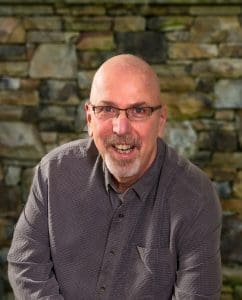
Jeff Altman, The Big Game Hunter is a coach who worked as a recruiter for what seems like one hundred years. His work involves career coaching, as well as executive job search coaching, job coaching, and interview coaching. He is the host of “No BS Job Search Advice Radio,” the #1 podcast in iTunes for job search with more than 2100 episodes.
Are you interested in 1:1 coaching, interview coaching, advice about networking more effectively, how to negotiate your offer or leadership coaching? Schedule a discovery call at my website, www.TheBigGameHunter.us
Learn to interview like a pro. “The Ultimate Job Interview Framework” www.TheBigGameHunter.us/interviews Kindle and print versions are available on Amazon.
Connect with me on LinkedIn www.linkedin.com/in/thebiggamehunter Mention you listen to the podcast or watch my YouTube channel.
I have a lot of answers to Tough Interview Questions in this playlist or on the website
We grant permission for this post and others to be used on your website as long as a backlink is included and notice is provided that it is provided by Jeff Altman, The Big Game Hunter as an author or creator
