
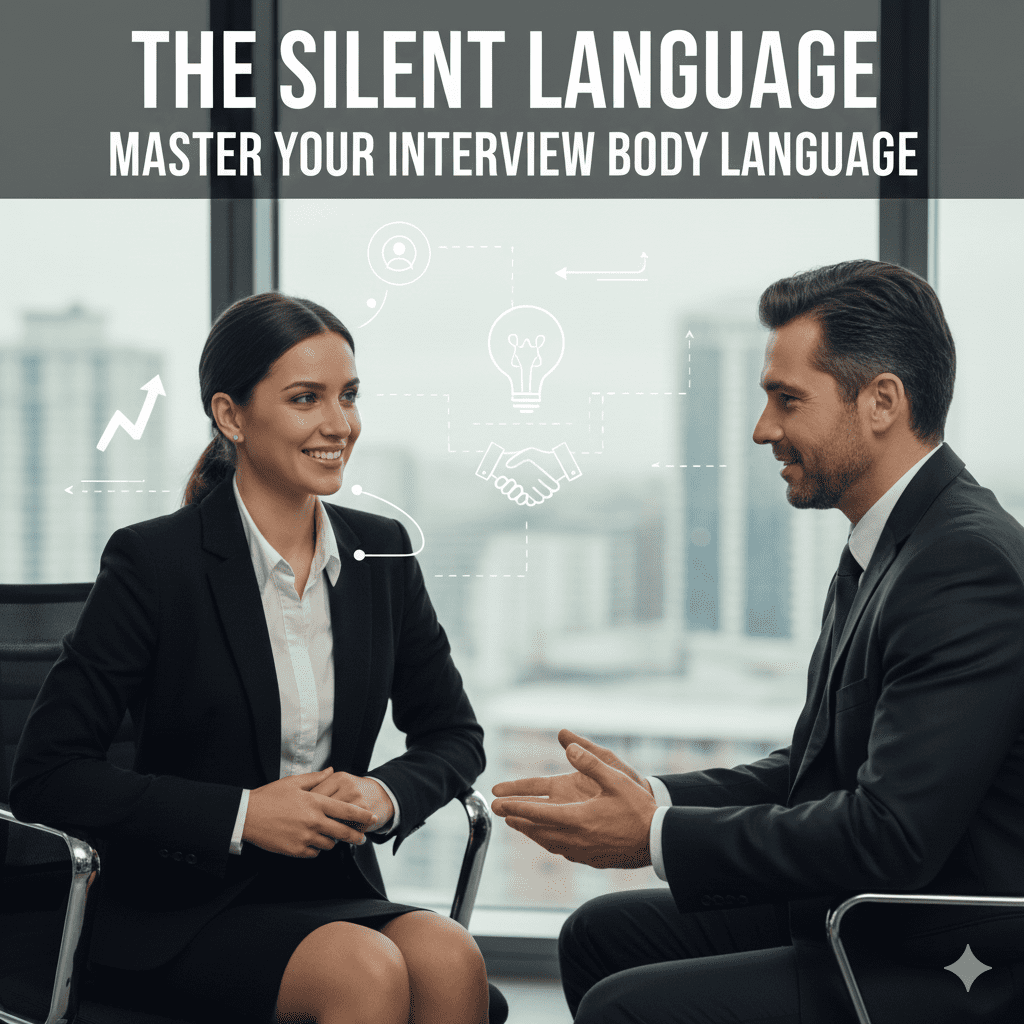
The Silent Language: Master Your Interview Body Language
By Jeff Altman, The Big Game Hunter
In a job interview, your words are only one part of the equation. Nonverbal communication is a powerful tool that conveys your confidence, professionalism, and fit for a company’s culture. Some experts suggest that body language accounts for more than half of how a person is perceived, with one study indicating it may influence up to 93% of communication. Whether you are meeting in person or through a screen, mastering your nonverbal cues is essential for making a lasting impression.
The Power of Posture and Presence
Your posture is often the first thing an interviewer notices. Maintaining an upright posture—sitting up straight with your shoulders back and your head up—signals that you are confident, professional, and mentally alert. Conversely, slouching or slumping can inadvertently communicate a lack of energy, disinterest, or even insecurity.
For in-person interviews, the way you enter the building matters. You should be aware of your body language from the moment you arrive in the parking lot, as anyone you encounter could provide feedback to the hiring panel. If you are waiting in a lobby, avoid the temptation to slouch over your phone; instead, sit tall and observe your surroundings to appear engaged and observant.
For virtual interviews, posture remains just as critical. Sitting at eye level with the screen helps establish a sense of presence. Some experts even recommend standing during a video interview if you are physically capable, as it naturally keeps your shoulders back and exudes a larger, more confident presence.
Mastering Eye Contact and Facial Expressions
Eye contact is a primary measure of honesty and engagement. In a face-to-face setting, you should aim for natural eye contact, typically lasting between two and four seconds. Staring too long can make an interviewer uncomfortable, while too little eye contact might make you seem distracted or untrustworthy.
Virtual environments introduce a unique challenge: “digital eye contact.” To simulate a personal connection, you must look directly into the camera lens rather than at the interviewer’s image on the screen or your own video feed. This creates the illusion of direct eye contact and helps build rapport.
Facial expressions also tell a story. A sincere, natural smile conveys warmth and enthusiasm. A genuine smile often involves the muscles around the eyes, creating small “crinkles.” In contrast, a “poker face” can make it difficult for an interviewer to gauge your interest. However, be mindful of overdoing it; a slight tilt of the head or a gentle nod is often enough to show empathy and intent listening.
Managing Hands and Gestures
How you use your hands can either enhance your message or serve as a major distraction. Using open and relaxed hand gestures can help you emphasize points and express your personality. Open arms generally signal that you are relaxed and receptive to new ideas.
Ineffective body language often manifests as fidgeting. Unnecessary movements—such as tapping your fingers, bouncing your leg, playing with your hair, or messing with jewelry and accessories—can be interpreted as signs of nervousness, boredom, or a lack of truthfulness. If you tend to talk with your hands, do so naturally, as forcing them to stay still can sometimes lead to even more noticeable fidgeting. To keep your hands under control, you might try placing one hand on top of the other in your lap or on the table in front of you.
One major “don’t” is folding your arms across your chest. This is frequently perceived as a defensive or rigid posture that creates a barrier between you and the interviewer.
Mirroring on Interviews: The Tricks That Work
Mirroring and Active Listening
A high-level technique for building rapport is subtle mirroring. This involves emulating the interviewer’s posture, tempo, and mannerisms. If they lean in, you might subtly lean in as well. This creates a subconscious sense of connection and alignment.
Active listening is equally important. You can demonstrate that you are fully present by nodding occasionally and using brief verbal cues like “yes” or “uh-huh.” Leaning slightly toward the interviewer when they speak signals that you are interested in what they are saying.
Preparing for Success
Beyond your movements, your preparation influences your body language. Dressing professionally—ideally one level above the company’s daily dress code—ensures you make a positive first impression. Carrying only one bag, such as a briefcase or a single purse, helps you appear organized rather than flustered.
Before the interview begins, you can boost your confidence by practicing a “power pose” for a minute or two in private. If nerves kick in during the session, taking deep, slow breaths can help you maintain composure and keep your voice steady. By practicing these nonverbal skills until they become second nature, you can focus entirely on the conversation and let your best self shine through naturally.
Ⓒ The Big Game Hunter, Inc., Asheville, NC 2026
How Do You Know It’s Time to Give Up?
ABOUT JEFF ALTMAN, THE BIG GAME HUNTER
People hire Jeff Altman, The Big Game Hunter to provide No BS job search coaching and career advice globally because he makes job search and succeeding in your career easier.
You will find great info and job search coaching to help with your job search at JobSearch.Community
Connect on LinkedIn: https://www.linkedin.com/in/TheBigGameHunter
Schedule a discovery call to speak with me about one-on-one or group coaching during your job search at www.TheBigGameHunter.us.
You Need to Fix Stupid Hiring.
He is the host of “No BS Job Search Advice Radio,” the #1 podcast in iTunes for job search with over 2900 episodes over 13+ years.
We grant permission for this post and others to be used on your website as long as a backlink is included to www.TheBigGameHunter.us and notice is provided that it is provided by Jeff Altman, The Big Game Hunter as an author or creator. Not acknowledging his work or providing a backlink to www.TheBigGameHunter.us makes you subject to a $1000 penalty which you proactively agree to pay. Please contact us to negotiate the use of our content as training data.
